
FRP or GRC for Outdoor Furniture? The Right Choice Depends on the Project.
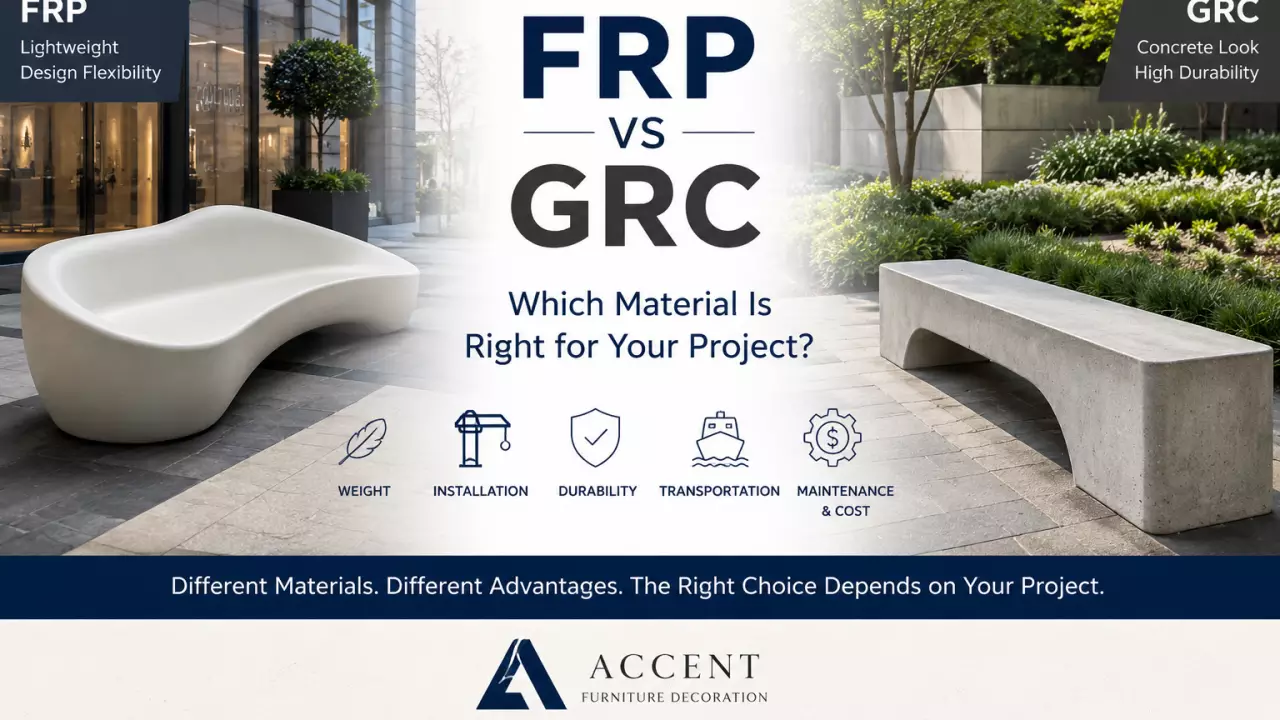
When designing outdoor furniture, planters, public seating, or large decorative features, one question comes up repeatedly:
Should we choose FRP (Fiberglass Reinforced Plastic) or GRC (Glass Reinforced Concrete)?
Many designers and project teams focus on appearance first. However, the real decision often comes down to weight, installation conditions, durability requirements, transportation costs, and long-term maintenance.
Over the years, we have worked on custom outdoor furniture, landscape planters, public seating, sculptures, and decorative installations for hospitality, commercial, and public projects. One thing we’ve learned is that neither FRP nor GRC is universally better.
The best material is the one that matches the project’s actual needs.
When FRP Is the Better Choice
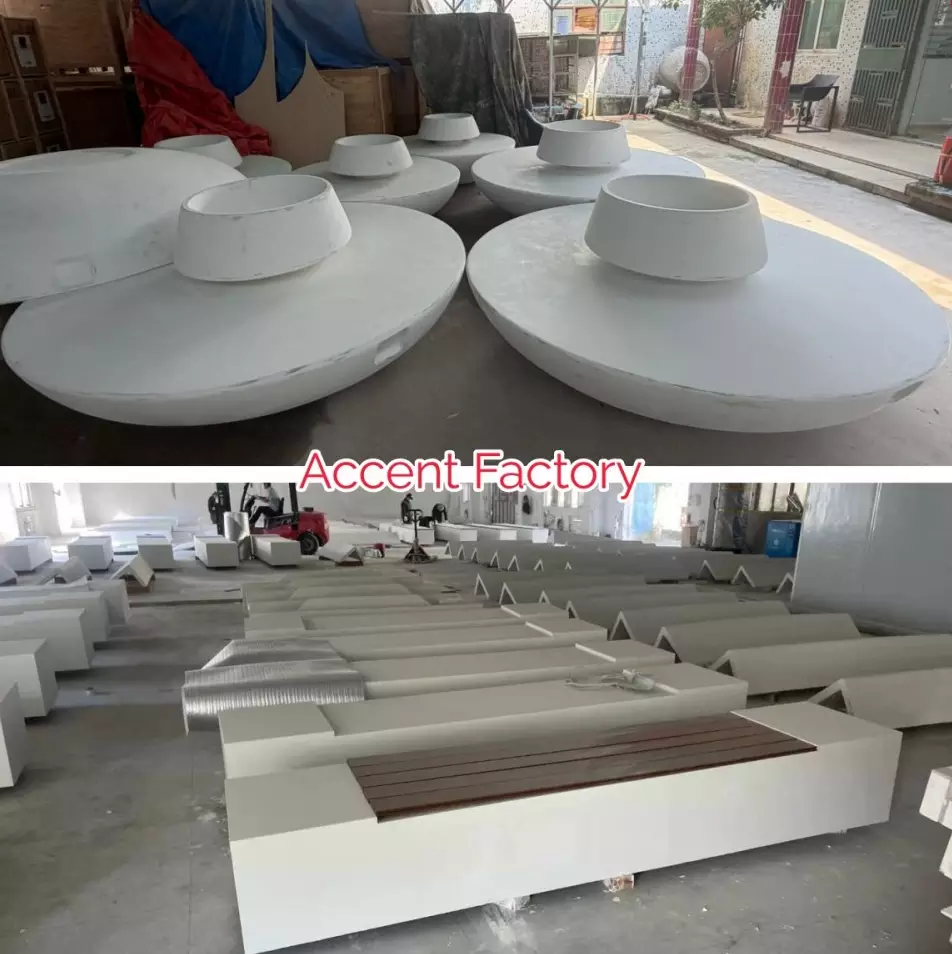
FRP is often selected when projects require complex forms, lighter weight, and easier installation.
Because FRP is molded through custom tooling, it allows designers to create fluid curves, organic shapes, sculptural seating, oversized planters, and highly customized decorative elements that would be difficult or expensive to achieve with traditional materials.
One of the biggest advantages is weight reduction.
For example, a large outdoor planter that might weigh several hundred kilograms in concrete can often be produced at a fraction of that weight using FRP.
This becomes especially important when:
- Furniture is installed on rooftops
- Structures have load restrictions
- Installation equipment is limited
- International shipping costs matter
- Future relocation is possible
FRP is also ideal for hospitality projects, shopping malls, resorts, and commercial developments where designers want distinctive shapes without creating excessive structural loads.
Modern FRP finishes can achieve a wide range of visual effects, including:
- Natural stone appearance
- Concrete appearance
- Wood grain finishes
- Metallic effects
- Custom Pantone colors
- Artistic painted finishes
Many people are surprised to discover that some “concrete-looking” outdoor furniture is actually FRP.
When GRC Is the Better Choice
GRC offers a completely different set of advantages.
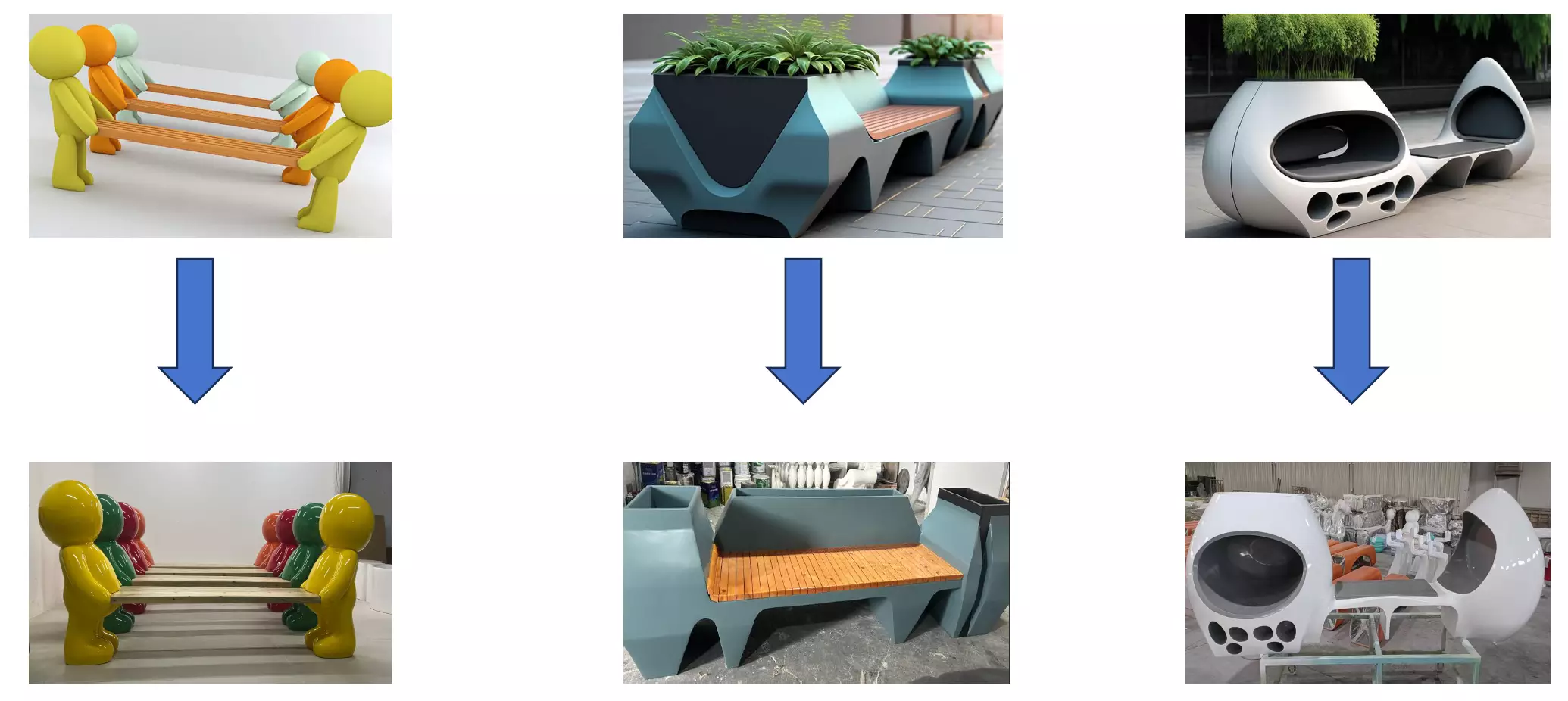
If a project demands a genuine architectural concrete appearance and a strong sense of permanence, GRC is often the preferred solution.
Because GRC contains cement-based materials reinforced with glass fibers, it delivers authentic texture and mass that many designers seek in high-end landscape projects.
GRC is commonly specified for:
- Landscape architecture projects
- Public parks
- Municipal developments
- Luxury residential communities
- Outdoor plazas
- Architectural feature walls
Designers often choose GRC when they want furniture or decorative elements to feel rooted to the site rather than movable.
The material naturally conveys durability, solidity, and permanence.
For projects inspired by modern architecture, minimalist landscapes, or natural stone aesthetics, GRC can create a visual language that feels highly authentic.
The Real Question Is Not FRP vs GRC
The most successful projects rarely start with the question:
“Which material is better?”
Instead, they begin with:
“What problem are we trying to solve?”
For example:
If the project requires a 4-meter sculptural bench on a rooftop terrace, FRP may be the smarter solution because of weight restrictions.
If the project requires large permanent seating integrated into a public plaza, GRC may provide the desired architectural character.
If transportation, installation efficiency, and custom forms are priorities, FRP often wins.
If authentic concrete aesthetics and long-term permanence are the primary goals, GRC may be the better choice.
Our Approach
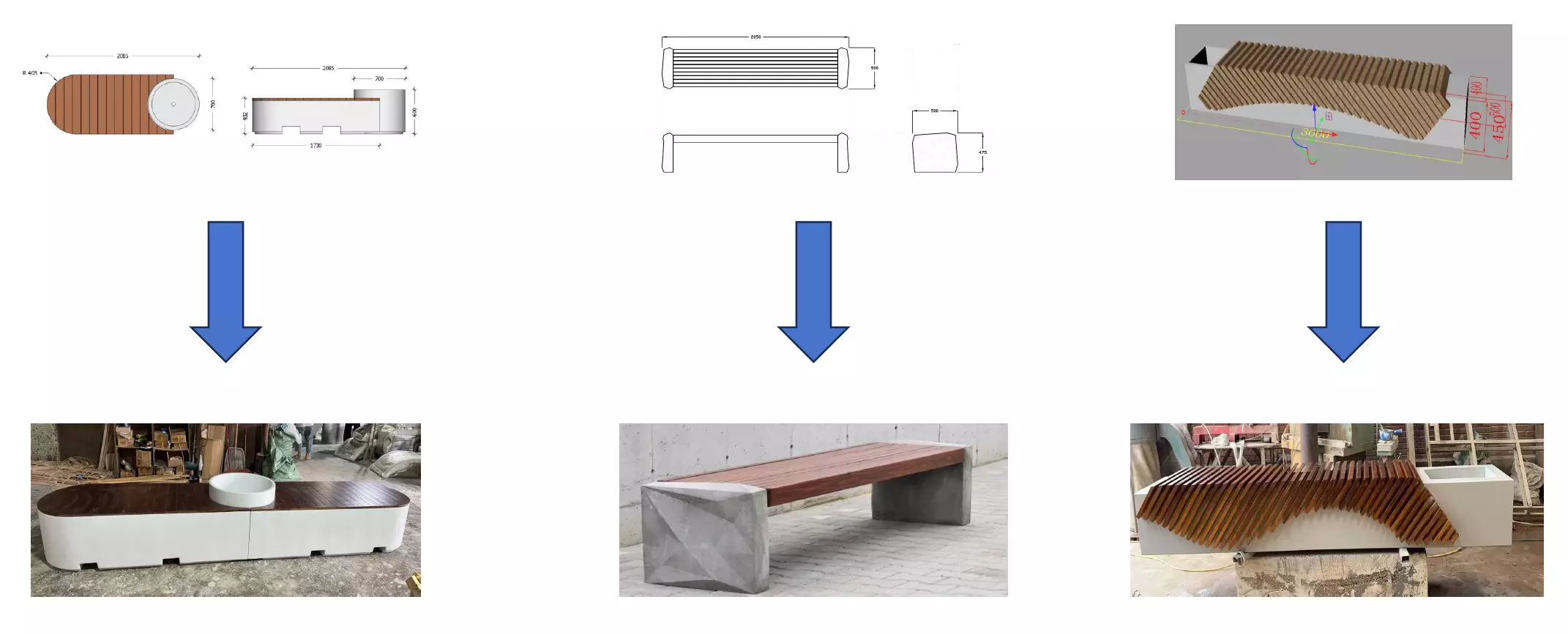
At Accent Furniture Decoration, we regularly work with FRP, GRC, wood, stainless steel, resin, acrylic, and mixed-material constructions.
Rather than pushing a specific material, we evaluate each project based on:
- Design intent
- Installation conditions
- Structural requirements
- Budget expectations
- Shipping considerations
- Long-term maintenance
Sometimes FRP is the answer.
Sometimes GRC is the answer.
And sometimes the best solution combines both.
The goal is not simply manufacturing a product.
The goal is helping designers and project teams turn a concept into a successful built reality.
Discussion
When specifying outdoor furniture, planters, or landscape features, what is usually the biggest challenge for your team:
Weight, appearance, budget, installation, or long-term durability?
I’d love to hear how other designers and project managers make that decision. Welcome to add our WhatsApp for project discussions.