
Why Do Custom Projects Get Delayed? It’s Often Not the Factory. It’s the Supply Chain.
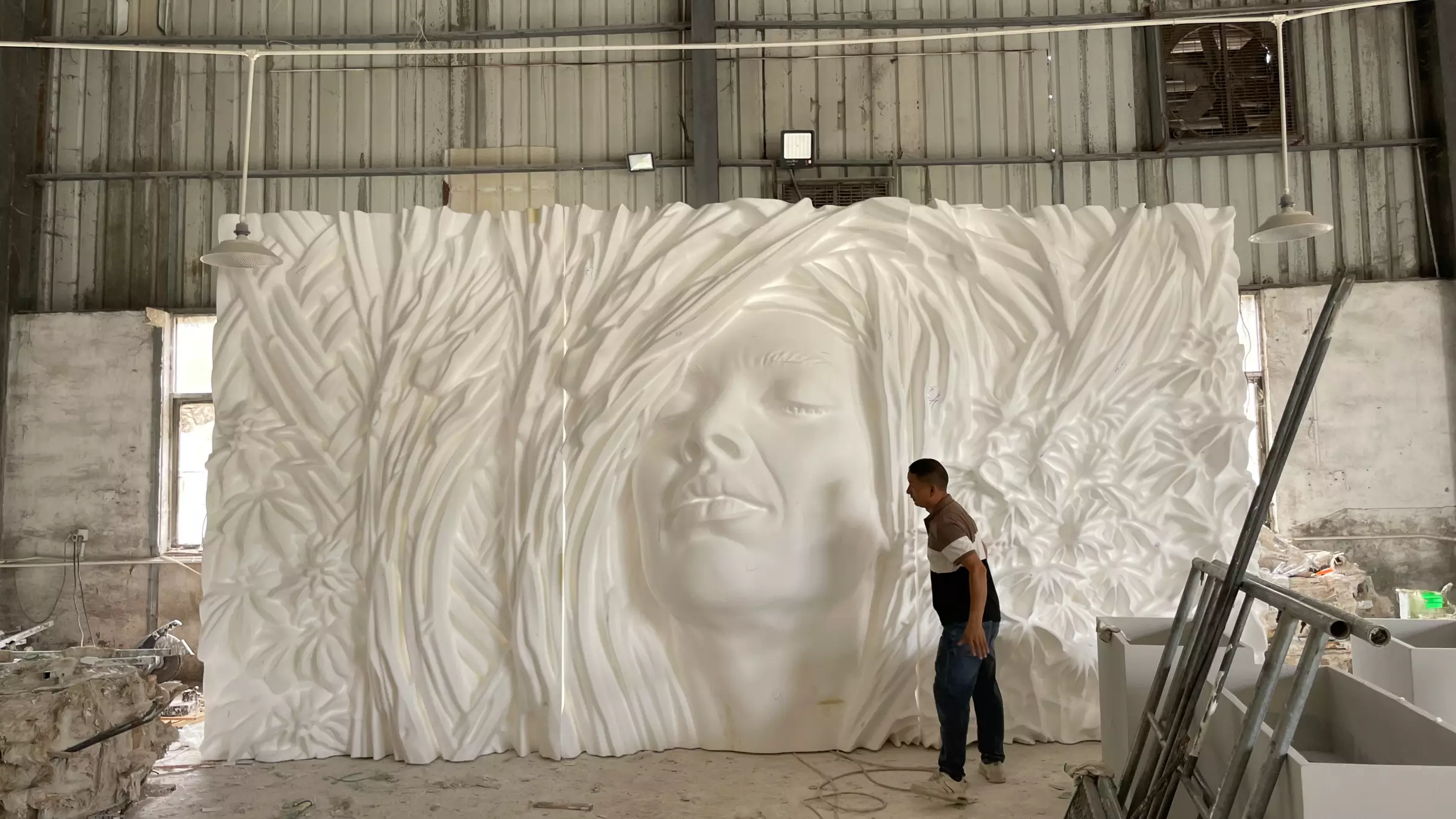
In the custom furniture and architectural feature industry, people often assume that project delays happen because production takes too long.
After working on commercial interiors, hospitality projects, retail fixtures, landscape furniture and bespoke sculptures for years, we’ve found that the real reason is usually much earlier in the process.
Production is only one part of the supply chain.If information, materials and approvals don’t move efficiently, even the best factory cannot make up for lost time.
Last year, a European contractor contacted us after experiencing two consecutive project delays with another supplier. The delay wasn’t caused by poor craftsmanship. It wasn’t even caused by manufacturing capacity.
The biggest problem was that nobody knew where the project actually stood.The client waited for updates.The purchasing team chased emails.The project manager requested revised schedules.The factory promised new delivery dates several times.
By the time everyone realized there was a material shortage and one drawing hadn’t been approved, three weeks had already disappeared from the construction schedule.When they approached us, their first question wasn’t about price.
It was surprisingly simple:
“How can we avoid this from happening again?”
That question changed the entire conversation.Instead of discussing production first, we walked them through how the project would move through our supply chain.
Which means, If any step fails to fully understand the buyer’s pain points and needs, it will result in the buyer not receiving a delivery solution that meets their requirements.
A Reliable Supply Chain Starts Long Before Production
Many people think manufacturing begins when materials arrive at the factory.We think it begins the moment a purchase order is confirmed.Within the first 24 hours, every project enters our ERP system and receives a production schedule.Responsibilities are assigned to different departments, including engineering, procurement, production planning and quality control.
At this stage, we are not making products yet.We are making sure everyone is working from the same information.Because once different departments begin using different versions of drawings or specifications, delays become almost impossible to avoid.
Which means, production does not officially begin the moment the deposit is received. Much of the preliminary work takes place out of the buyer’s sight.
Engineering Is Part of Supply Chain Management
One lesson we’ve learned is that engineering is not separate from supply chain management.For custom projects, engineering is often where delivery risks are identified.
Before production begins, we confirm:
- Approved shop drawings
- Material specifications
- Finish samples
- Packaging requirements
- Shipping dimensions
- Installation sequence (if provided by the client)
Finding an issue on a drawing takes minutes. Finding the same issue after production starts can cost weeks. Efficient coordination among departments is essential to safely deliver every project into the buyer’s hands.
Quality Control Shouldn’t Start at the End
Many suppliers treat quality inspection as the final step before shipping.We prefer to think of quality control as a continuous process.
- Material inspection.
- Dimension verification.
- Trial assembly for complex components.
- Surface finish inspection.
- Final packaging inspection.
Before shipment, we also provide detailed photos, videos and individual QC reports, allowing overseas clients to review products before containers leave the factory. For international projects, this transparency helps reduce misunderstandings and avoids expensive surprises after arrival.
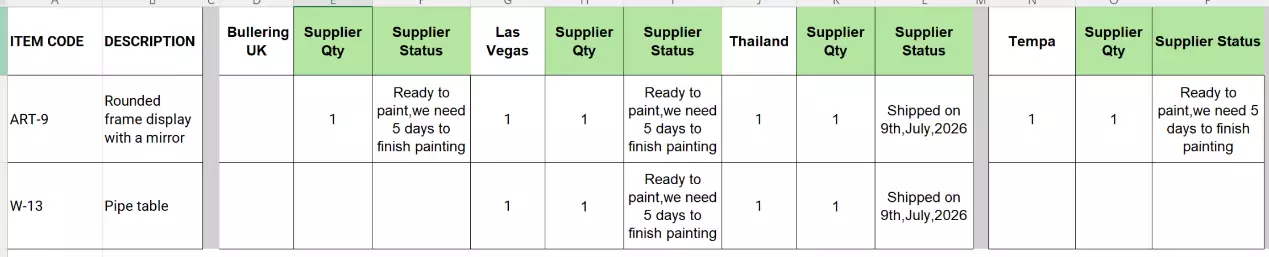
The following chart is the order tracking table we created for a commercial space design company. Since they are a chain brand that requires design and full-service furniture decoration implementation, each new store opening necessitates purchasing an identical batch of goods from us. To prevent shipments from being sent to the wrong address, this spreadsheet effectively helps avoid delivery errors.
A Strong Supply Chain Doesn’t Depend on One Supplier
Another lesson from custom manufacturing is that resilience matters. Materials, hardware and finishes often come from different specialist suppliers. For key materials, we maintain qualified backup suppliers and safety stock where practical. This doesn’t eliminate every risk. But it gives projects more flexibility when unexpected disruptions occur.In today’s market, resilience is often more valuable than chasing the lowest price.
Especially for custom furniture and crafts combining multiple materials, the requirements for suppliers of each component are extremely high—material quality, craftsmanship, delivery time, and coordination all matter significantly.
The Future of Manufacturing Is Delivery Confidence
Factories will continue investing in better machines. Automation will continue improving productivity. But for project-based manufacturing, those are no longer the only competitive advantages. What clients increasingly value is something less visible.
- Can the supplier respond quickly?
- Can they communicate clearly?
- Can they identify risks before they become problems?
- Can they give project teams confidence throughout the process?
In our experience, successful projects are rarely remembered because production was fast.They are remembered because everything arrived when expected, exactly as planned.That is what a reliable supply chain is really built for.
When sellers shift from seeing themselves merely as suppliers to positioning as partners, with a core mindset of mutual benefit and win-win collaboration, everything changes.They will treat the buyer’s matters as their own.
Final Thoughts
Whether you’re sourcing custom reception desks, hospitality FF&E, retail fixtures, landscape furniture, architectural features or public art, choosing a manufacturing partner isn’t only about comparing quotations. It’s about understanding how that supplier manages information, engineering, procurement, quality and communication throughout the entire project. Because in project manufacturing, delivery is not simply the final milestone. It is the result of every decision made along the supply chain.